
Best Time to Climb, Weather Conditions, Rainy Season Closure & Route Advice
Mount Rinjani trekking season is the most important factor to consider before planning your hike. Standing at 3,726 meters on Lombok Island, Mount Rinjani offers one of Indonesia’s most remarkable volcano trekking experiences. However, weather conditions, trail safety, and national park regulations vary throughout the year.
Understanding the best time to climb Mount Rinjani will help you plan a safer, more comfortable, and more rewarding adventure. This updated 2026 guide provides a complete overview of the Mount Rinjani trekking season, including weather patterns, monthly conditions, route recommendations, rainy season closure, and practical planning tips.
Mount Rinjani is not open for trekking all year. For 2026, Mount Rinjani National Park announced that trekking destinations are closed from 1 January to 31 March 2026, including Senaru, Torean, Sembalun, Timbanuh, Tetebatu, and Aik Berik routes. The announcement also states that the closure supports visitor safety and gives nature time to recover during the potential extreme-weather period.
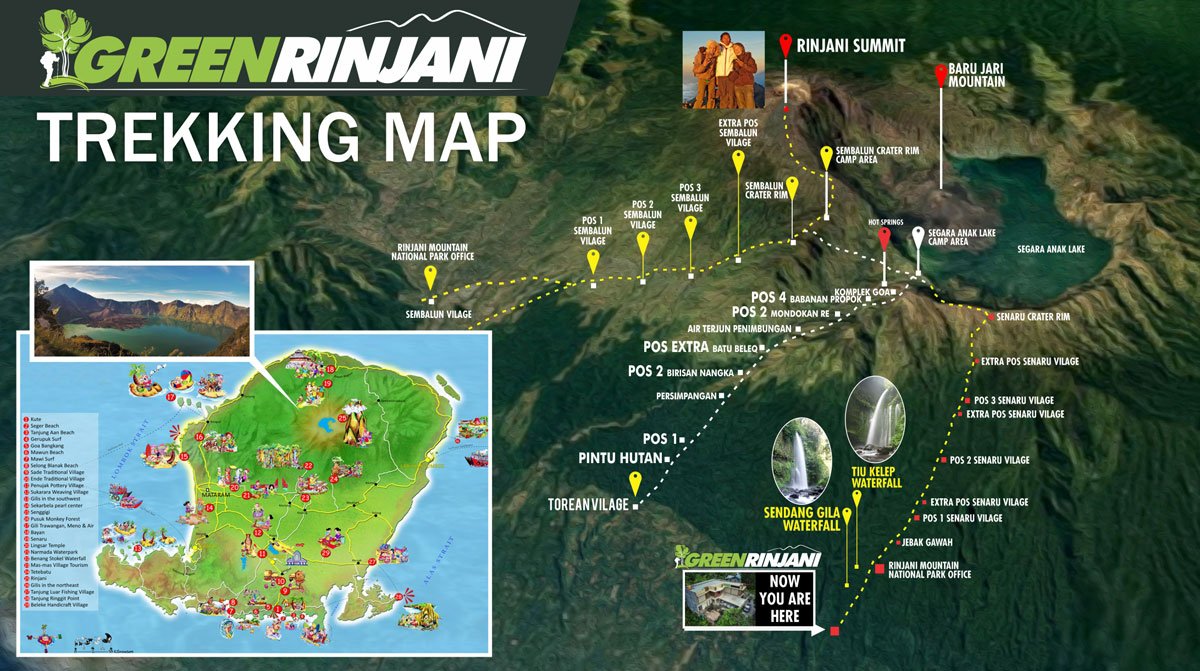
Mount Rinjani Trekking Season Overview
Mount Rinjani National Park is officially managed by Balai Taman Nasional Gunung Rinjani (BTNGR). Trekking access depends on official route status, weather conditions, visitor safety, trail conditions, and national park policy.
| Season Period | General Status |
|---|---|
| 1 April – 31 December | Open Season |
| 1 January – 31 March | Closed Season |
The park closes annually during the rainy season to protect trekkers and allow trail recovery. Heavy rainfall, landslides, fog, and unstable terrain can make trekking unsafe during this period.
If you plan to climb Mount Rinjani, always schedule your trek between April and December, when trails are normally accessible and visibility is significantly better. However, the final opening status always depends on official national park regulations and current trail conditions.
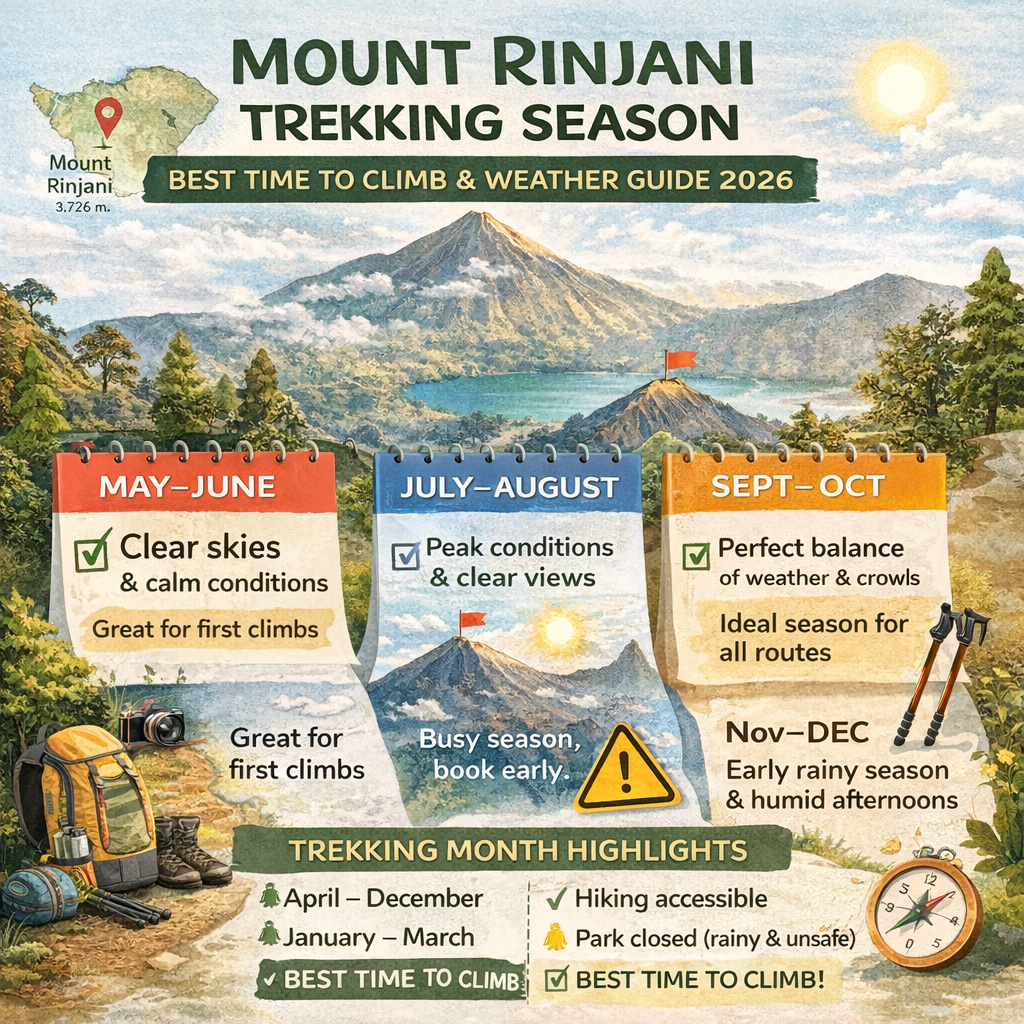
Mount Rinjani Trekking Season – Weather by Month
| Month | Season | Conditions | Recommendation |
|---|---|---|---|
| January – March | Rainy Season | Heavy rain, park closed | No trekking |
| April | Early Dry Season | Green scenery, clear air | Good for photography |
| May – June | Stable Dry Season | Cool mornings, clear skies | Excellent |
| July – August | Peak Dry Season | Cold nights, busy season | Great, book early |
| September – October | Late Dry Season | Warm, fewer crowds | Best balance |
| November – December | Early Rainy Season | Humid, light rain | Short routes only |
Weather on Mount Rinjani can still change quickly, even during the dry season. Warm layers, wind protection, proper trekking shoes, and rain gear are essential for every trek.
For November and December, short routes are more recommended because rainfall may begin to increase and trail conditions can change quickly. Guests should always confirm the latest route status before booking during the late season.
Mount Rinjani Weather Conditions
Mount Rinjani weather changes by altitude, season, and route. The starting villages can feel warm, while crater rim, lake camp, and summit areas can become very cold, especially at night or before sunrise.
| Area / Time | Approximate Condition |
|---|---|
| Daytime temperature | Around 15–25°C depending on altitude and weather |
| Crater rim at night | Around 5–8°C |
| Summit before sunrise | Can drop close to 3°C or feel colder with wind |
| Rainfall peak | Usually December to February |
| Windiest months | Often July and August |
Even during the dry season, weather at high altitude can change rapidly. Warm layers, wind protection, and rain gear are essential for every trek.
Best Time to Climb Mount Rinjani by Route
For clear sunrise views, stable weather, and safer trail conditions, the best time to climb Mount Rinjani is generally between May and October.
May – June
May and June usually offer clear skies, calmer conditions, and lush landscapes after the rainy season. These months are good for guests who want greener scenery, fewer crowds, and comfortable trekking conditions before the peak season begins.
Best for:
- 2D1N Summit Sembalun
- 2D1N Senaru Crater Rim
- 3D2N Sembalun to Senaru
- Early-season photography
July – August
July and August are peak trekking months. Visibility is usually excellent, but nights can be colder and the trails are busier. During this period, trekking permits and guide availability can be limited, so early booking is highly recommended.
Best for:
- Summit programs
- 3D2N Sembalun to Torean
- 4D3N summit programs
- 5D4N expedition routes
September – October
September and October often provide the best balance between stable weather and fewer trekkers. Temperatures can feel warmer than July and August, and the mountain is usually less crowded after peak season.
Best for:
- 3D2N summit programs
- 4D3N Torean route
- 2D1N Summit Sembalun
- Guests who want good weather with fewer crowds
These months are ideal for summit programs as well as longer routes via Torean.
Recommended Trekking Routes by Season
| Season | Recommended Route | Why |
|---|---|---|
| April – June | 3D2N Sembalun–Senaru / 2D1N Summit Sembalun | Green scenery, fresh landscape, ideal for early-season trekkers |
| July – August | 3D2N Sembalun–Torean / 5D4N Expedition | Best visibility, suitable for longer treks |
| September – October | 3D2N / 4D3N Torean Route / 2D1N Summit Sembalun | Best weather–crowd balance |
| November – December | 2D1N Senaru Crater Rim | Short treks before closure |
Longer programs such as 4D3N and 5D4N are better during more stable months because they involve multiple camping nights, summit conditions, lake descent, hot springs, and longer exposure to changing weather.
Best Season by Trekking Program
| Trekking Program | Best Season | Notes |
|---|---|---|
| 1 Day Senaru Trek | April – December if officially open | Best for strong hikers with limited time |
| 2D1N Senaru Crater Rim | April – December if officially open | Good non-summit option |
| 2D1N Summit Sembalun | June – September | Fast and physically demanding |
| 3D2N Summit Sembalun to Senaru | May – October | Classic summit and Senaru descent |
| 3D2N Summit Sembalun to Torean | June – October | Summit, lake, hot springs, and scenic valley descent |
| 4D3N Summit Programs | May – October | Better pace and more complete experience |
| 5D4N Expedition | May – October | Best with stable weather and good preparation |
| Soft trekking / waterfall routes | Depends on official route status | Always check weather and trail conditions |
Rainy Season and Official Closure Period
Mount Rinjani is commonly closed during the rainy season from January to March. For 2026, the official closure period is 1 January to 31 March 2026. The official announcement also mentions the last e-Rinjani booking date, last check-in, and last check-out before the closure period.
Rainy season trekking can be dangerous because heavy rain may cause:
- Slippery trails
- Landslide risk
- River flooding
- Poor visibility
- Strong wind
- Difficult evacuation
- Trail damage
- Campsite damage
- Higher accident risk
Guests should not attempt to trek Mount Rinjani during the official closure period. Trekking outside the official rules can be unsafe and may violate national park regulations.
Month-by-Month Mount Rinjani Trekking Guide
January
January is part of the rainy season and is usually within the official closure period. Heavy rain, poor visibility, landslide risk, and unsafe trail conditions make trekking unsuitable.
Recommendation: No trekking / officially closed period.
February
February is also part of the rainy season. Trails may be wet, unstable, and unsafe. This period is normally used for ecosystem recovery, trail protection, and maintenance.
Recommendation: No trekking / officially closed period.
March
March is usually still within the closure period. Even if rainfall starts to reduce near the end of the month, trekking normally remains restricted until the national park officially reopens.
Recommendation: Wait for the official reopening announcement.
April
April is usually the beginning of the trekking season after the rainy season closure. The landscape can be green and beautiful, with clearer air and fresh mountain scenery.
Best for: Green scenery, clear air, photography, and fewer crowds.
Prepare for: Possible wet trails, variable weather, and cooler conditions.
May
May is generally a very good month for trekking. Weather often becomes more stable, and the mountain landscape may still look fresh after the rainy season.
Best for: Crater rim treks, summit programs, and fewer crowds than peak season.
Prepare for: Some remaining humidity or occasional rain.
June
June is one of the strong trekking months. Weather is usually drier than April and May, but the peak crowd has not fully arrived yet.
Best for: Summit trekking, 3D2N and 4D3N programs, lake and hot springs treks.
Prepare for: Cooler mornings, clear skies, and stronger wind at higher camps.
July
July is one of the best and busiest months for Mount Rinjani trekking. The weather is usually dry, and summit visibility is often better.
Best for: Summit sunrise, crater rim camping, lake programs, and longer treks.
Prepare for: Cold nights, more trekkers on the trail, and earlier booking.
August
August is peak trekking season. Weather is usually dry, views are often clear, and demand for permits and trekking services is high.
Best for: Summit programs and classic Rinjani trekking.
Prepare for: Early booking, limited quota, colder nights, and busier campsites.
September
September is one of the best months to trek Mount Rinjani. Conditions are usually still dry, but crowds may start to reduce compared with August.
Best for: Summit, lake, hot springs, Torean route, and balanced weather.
Prepare for: Warm daytime conditions, fewer crowds, and possible dusty trails.
October
October can still be a very good trekking month. It often offers a good balance between stable weather and fewer trekkers.
Best for: Flexible trekkers who want good weather with fewer crowds.
Prepare for: Warmer temperatures, changing weather, and rain protection.
November
November is early rainy season. Weather can become humid, and light rain may appear more often. Trekking may still be possible if the mountain is officially open, but shorter routes are more recommended.
Best for: Shorter routes such as Senaru Crater Rim, if officially open.
Prepare for: Humid weather, light rain, wet trails, and possible route changes.
December
December is close to the rainy season closure period. Weather is usually more humid, and light rain can become more frequent. Trekking should be planned carefully and only if the route is officially open and safe.
Best for: Short routes only, if officially open.
Prepare for: Humid weather, light rain, and higher chance of changing trail conditions.
Packing Advice Based on Season
The Mount Rinjani trekking season affects what you should bring. Even in the dry season, warm clothing and rain protection are still important because weather at high altitude can change quickly.
Dry Season Packing
During the dry season, prepare for sun, dust, cold nights, and wind.
Bring:
- Trekking shoes
- Sunscreen
- Sunglasses
- Hat or cap
- Buff or scarf
- Warm jacket
- Headlamp
- Refillable water bottle
Wet or Variable Season Packing
During early or late season, prepare for rain and slippery trails.
Bring:
- Rain jacket or poncho
- Waterproof bag cover
- Dry bag
- Extra socks
- Quick-dry clothes
- Trekking shoes with strong grip
- Plastic bag for wet clothes
Cold Weather Packing
Cold weather can happen in any trekking month, especially at crater rim and summit areas.
Bring:
- Thermal layer
- Warm jacket
- Gloves
- Warm hat
- Warm socks
- Dry clothes for sleeping
For a complete preparation list, guests should also read the Mount Rinjani trekking packing list before arrival.
Early Booking Tips
During July and August, Mount Rinjani trekking permits are limited by daily quota, and trekking demand is high. Booking early helps secure your preferred date, guide allocation, accommodation, transport, and trekking logistics.
We strongly recommend booking 2–3 months in advance during peak season.
Good booking preparation includes:
- Confirming your trekking date
- Choosing your route and program
- Sending accurate passport or ID details
- Checking permit availability
- Preparing deposit payment
- Arriving one day before trekking
- Avoiding tight flight or boat schedules after the trek
TNGR provides official e-Rinjani resources related to quota checking, online booking procedures, and insurance payment procedures.
What to Do During the Closed Season
Although Mount Rinjani summit and main trekking routes are closed during the rainy season, Lombok still offers many alternative outdoor experiences.
Pergasingan Hill Trek – Sembalun
Pergasingan Hill is a scenic hill trek near Sembalun with beautiful sunrise views over Sembalun Valley and Mount Rinjani. It can be done as a day trek or overnight camping trip depending on weather and local conditions.
Waterfall Exploration – North Lombok
North Lombok waterfalls are especially impressive during the rainy months. Popular options include:
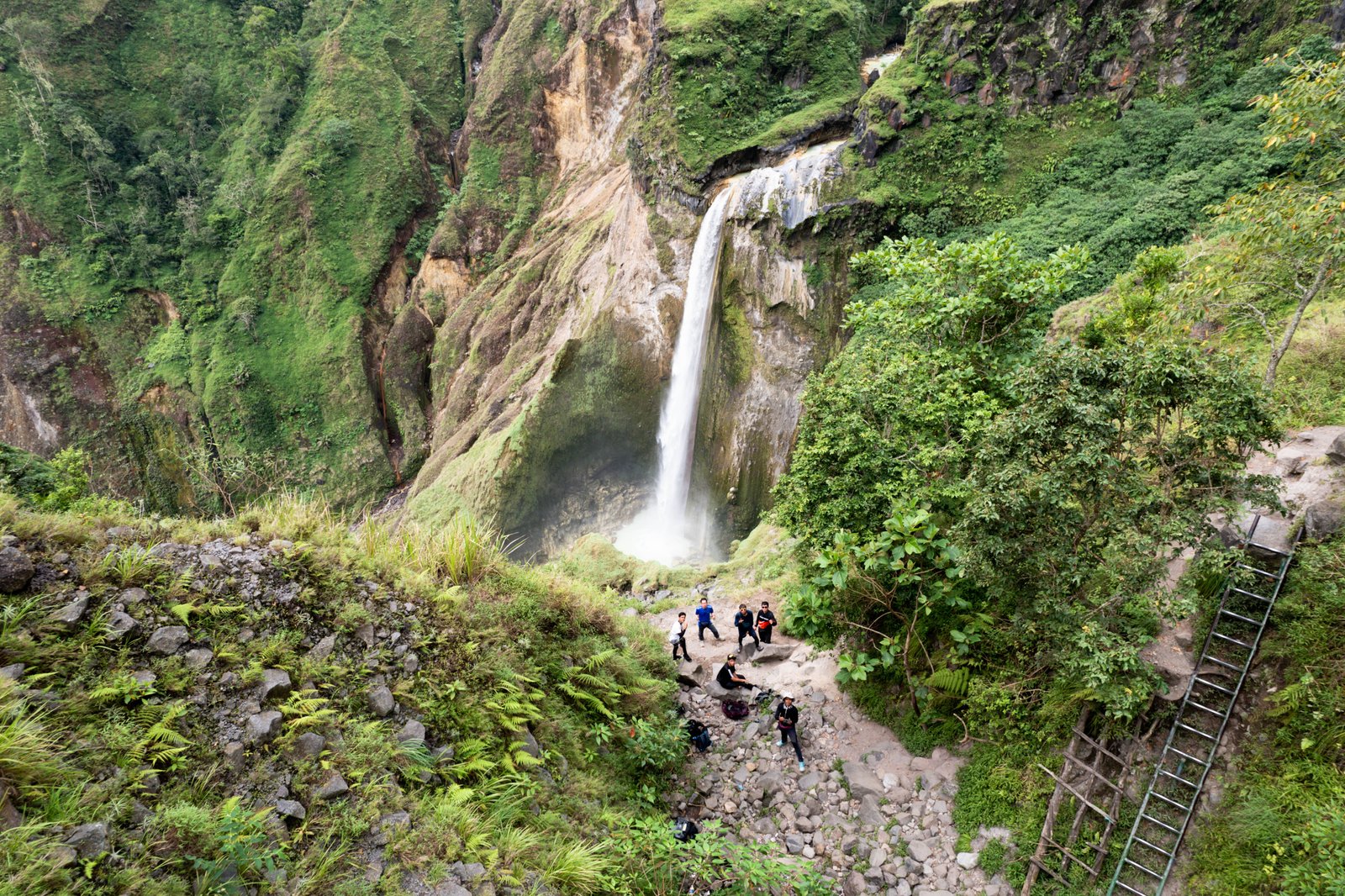
- Sendang Gile Waterfall
- Tiu Kelep Waterfall
- Tiu Teja Waterfall
- Benang Stokel Waterfall
- Benang Kelambu Waterfall
Lombok Day Tours
Guests can enjoy cultural villages, rice terraces, beaches, viewpoints, and local experiences around Senaru, Sembalun, Central Lombok, and other areas.
Lombok Private Transport Service
Green Rinjani provides safe and reliable private transport across Lombok, including airport transfers, Bangsal Harbor, Senggigi, Kuta Lombok, Senaru, Sembalun, and other destinations.
Our drivers are local professionals who understand road and weather conditions year-round.
Closed season does not mean you cannot enjoy Lombok. It only means Mount Rinjani trekking activities must follow national park safety rules.
Best Place to Stay Before Trekking
Staying in Senaru or Sembalun before your trek allows proper rest, acclimatization, and preparation. Early arrival also gives you time to enjoy waterfalls and village life before heading into the mountains.
Stay in Senaru
Senaru is ideal for:
- Senaru Crater Rim Trek
- Sembalun route programs with transfer to Sembalun
- Guests who want waterfalls before trekking
- Guests staying at Green Rinjani Guest House
Stay in Sembalun
Sembalun is ideal for:
- Guests who want to start very close to the Sembalun trailhead
- Summit programs via Sembalun
- Travelers who want mountain village scenery before the trek
Most Green Rinjani trekking packages include one night accommodation in Senaru before the trek, including briefing and preparation support.
Safety Advice for Changing Weather
Weather can affect trekking safety and itinerary decisions. Guides may adjust the plan if conditions are unsafe.
Possible changes include:
- Delaying summit push
- Skipping summit attempt
- Adjusting camp timing
- Slowing the trekking pace
- Changing rest stops
- Ending the trek earlier for safety reasons
Guests should respect guide decisions because local guides understand route conditions, weather patterns, and emergency risks.
Safety is more important than completing the itinerary exactly as planned.
When Should You Avoid Trekking Mount Rinjani?
You should avoid trekking Mount Rinjani when:
- The national park is officially closed
- Heavy rain is expected
- Trails are unsafe
- You are not physically prepared
- You have no proper shoes or warm clothes
- You are sick or injured
- You need to catch a flight too soon after trekking
- You are unable to follow guide instructions
Mount Rinjani is a serious mountain environment. Trekking should always be done with realistic preparation, proper equipment, and respect for official safety rules.
Important Official Route Status Note
The Mount Rinjani trekking season can change from year to year. Although the mountain is commonly open from April to December and closed from January to March, the final decision always depends on Mount Rinjani National Park.
Before booking, guests should confirm:
- Official route opening status
- e-Rinjani permit availability
- Weather forecast
- Group schedule
- Check-in and check-out timing
- Pick-up and drop-off plan
For official updates about trekking routes, closure announcements, permits, and national park regulations, guests can refer to the official Mount Rinjani National Park website.
Quick Summary
| Topic | Summary |
|---|---|
| Open season | April – December |
| Closed season | January – March |
| 2026 closure | 1 January – 31 March 2026 |
| Best time to climb | May – October |
| Best short trek | 2D1N Summit Sembalun or 2D1N Senaru Crater Rim |
| Best long trek | 5D4N Sembalun–Torean |
| Best alternatives January–March | Pergasingan Hill, waterfalls, Lombok tours |
| Late season advice | November–December: short routes only if officially open |
Why Trek with Green Rinjani
Green Rinjani is more than a trekking operator. It represents over a decade of honesty, education, and environmental care.
Since 2011, we have guided thousands of trekkers on Mount Rinjani with one clear purpose: to protect the mountain while sharing its beauty responsibly.
For us, trekking Rinjani is not only a physical challenge. It is a personal journey. Every guest arrives with a different intention — adventure, photography, self-discovery, or simply the desire to feel connected to nature.
We encourage respect on the trail, patience with one another, and awareness that this sacred mountain belongs to everyone.
Leading by Example
By choosing Green Rinjani, you support a locally owned initiative built on integrity and long-term responsibility.
Over the years, our actions have spoken clearly:
- We introduced Zero-Waste Trekking practices
- We organized tree planting and reforestation programs
- We ensured fair treatment for porters and guides
- We built transparent, safety-focused operations
Our mission has never been competition. It has always been transformation.
Our Commitment to Sustainability
Today, Green Rinjani is recognized for its leadership in environmental care, safety standards, and community involvement.
We work closely with the Mount Rinjani National Park Authority and local ranger teams to support responsible trekking and protect trails and ecosystems for future generations.
Our ongoing initiatives include:
- Supporting local education in Senaru and Sembalun
- Providing fair employment opportunities
- Promoting environmental awareness among trekkers
- Supporting cleaner and more responsible trekking practices
When you trek with Green Rinjani, you directly contribute to these efforts.
The Green Rinjani Spirit
We do not follow trends — we set standards.
We are not imitators — we are educators.
Every step reflects respect for the mountain we call home.
Small, consistent actions create meaningful change.
A Legacy of Honesty, Care, and Community
Green Rinjani stands as proof that a local initiative can grow into a positive force for an entire mountain ecosystem.
Every trekker who joins us becomes part of that legacy — protecting Mount Rinjani while supporting the people who live around it.
We are Green Rinjani, the original eco-trekking company since 2011. Every journey is real, locally owned, and led with responsibility — one step at a time.
Need Help Choosing the Best Trekking Date?
If you are unsure when to trek Mount Rinjani, Green Rinjani can help you check the best available option based on:
- Your travel date
- Trekking route
- Fitness level
- Summit or non-summit goal
- Weather expectation
- Permit availability
- Pick-up and drop-off plan
Contact Green Rinjani before booking so our team can help you choose a suitable trekking date and route.
When is the best time to trek Mount Rinjani?
The best time to trek Mount Rinjani is usually between May and October. July and August offer great visibility but are busier, while September and October often provide the best balance between weather and fewer crowds.
Is Mount Rinjani open all year?
No. Mount Rinjani is not open all year. The normal open season is April to December, while January to March is the closed season for rainy weather, trail recovery, and safety protection.
Can I climb Mount Rinjani in January, February, or March?
No. January, February, and March are normally part of the official closure period. During this time, trekking routes are closed due to rainy season conditions, safety risks, and ecosystem recovery.
Is April a good month to climb Mount Rinjani?
April can be a good month for green scenery, clear air, and photography after the rainy season. However, some trails may still be wet, so guests should prepare proper shoes and rain protection.
Which months are best for the Mount Rinjani summit?
May to October is generally the best period for summit programs. July and August usually have excellent visibility, while September and October often offer a better balance between stable weather and fewer trekkers.
Is Mount Rinjani cold at night?
Yes. Crater rim, lake camp, and summit areas can feel very cold at night, especially with wind. Guests should bring a warm jacket, thermal layer, gloves, beanie, and warm socks.
Can weather change during the trek?
Yes. Weather on Mount Rinjani can change quickly, even during the dry season. Trekkers should always prepare warm layers, wind protection, rain gear, and proper trekking shoes.
Which route is best in November or December?
In November and December, short routes are more recommended because the weather can become humid with light rain and changing trail conditions. The 2D1N Senaru Crater Rim trek is usually a better option if the route is officially open.
Should I book early during peak season?
Yes. July and August are busy months, and trekking permits are limited by daily quota. Booking 2–3 months in advance is recommended for peak season.
What should I bring for Mount Rinjani trekking season?
Guests should bring trekking shoes, warm jacket, rain jacket, quick-dry clothes, headlamp, gloves, warm hat, sunscreen, sunglasses, and a small daypack. Packing should be adjusted based on the month and route.
