
What to Bring, What Green Rinjani Provides, Clothing Advice, Shoes Guide & Weather Preparation
Mount Rinjani trekking packing list is one of the most important parts of preparing for a safe and comfortable trek. Mount Rinjani is not an ordinary hike, because the route can include hot savanna trails, shaded rainforest, steep volcanic paths, cold crater rim nights, strong summit winds, lake camping, hot springs, mist, rain, and dusty dry-season trails.
Because the conditions can change quickly, bringing the right trekking gear is essential. A proper packing list helps you stay comfortable, safe, and prepared for each section of the route without carrying unnecessary weight.
This guide explains what to bring for Mount Rinjani trekking, what Green Rinjani provides, which shoes and clothing are recommended, and how to prepare for different weather conditions before your trek.
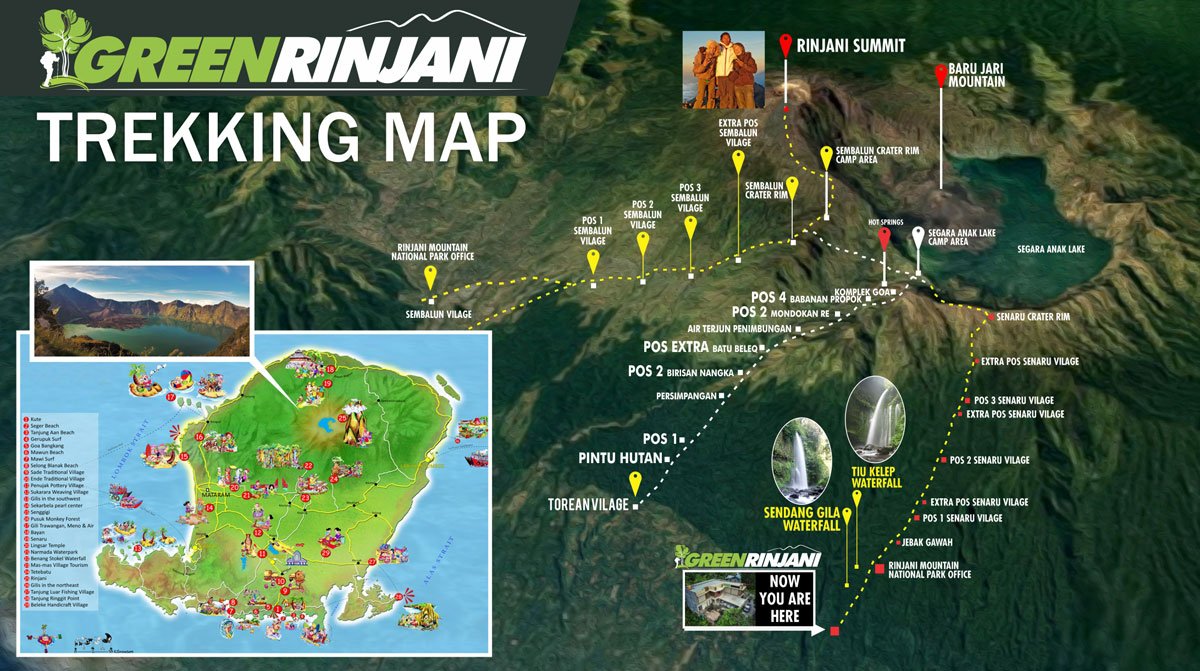
Mount Rinjani Trekking Packing List – Quick Packing Summary
For most Mount Rinjani trekking programs, this Mount Rinjani trekking packing list helps guests prepare the most important personal items before starting the trek.
Guests should prepare:
- Trekking shoes with good grip
- Warm jacket
- Rain jacket or poncho
- Quick-dry trekking clothes
- Thermal layer for cold nights
- Headlamp or flashlight
- Gloves and warm hat
- Small daypack
- Personal medicine
- Toiletries
- Power bank
- Dry clothes
- Refillable water bottle
- Sunscreen and sunglasses
Guests do not need to bring camping tents, sleeping bags, mattresses, cooking equipment, or large food supplies because these are prepared by Green Rinjani.
What Green Rinjani Provides
Green Rinjani provides complete trekking support for all Mount Rinjani trekking programs. Our team prepares the main trekking logistics, camping equipment, meals, drinking water, permits, and local support before and during the trek.
Trekking Equipment and Camping Facilities
Green Rinjani provides:
- Trekking tent
- Sleeping bag
- Mattress
- Pillow
- Toilet tent
- Camping table
- Camping chairs
- Cooking equipment
- Dining equipment
- Trash bags and waste management support
All camping equipment is prepared before the trek and carried by our porter team.
Food and Drinking Water
During the trek, meals are prepared by our porter team on the mountain.
Green Rinjani provides:
- Breakfast
- Lunch
- Dinner
- Fruits
- Snacks
- Tea
- Coffee
- Drinking water
Guests do not need to bring large food supplies. However, you may bring small personal snacks such as chocolate, energy bars, candy, or electrolyte powder if you prefer.
Guides, Porters, and Trekking Support
Every trek is supported by local guides and porters.
Our guide team helps with:
- Route navigation
- Trekking pace
- Safety supervision
- Weather assessment
- Basic first aid support
- Guest coordination during the trek
Our porter team helps with:
- Carrying camping equipment
- Carrying food and drinking water
- Setting up camp
- Preparing meals
- Dismantling camp
- Carrying rubbish down from the mountain
Guests are only expected to carry their own personal daypack.
Accommodation Before the Trek
Most Green Rinjani trekking packages include one night accommodation in Senaru before the trek.
This helps guests:
- Rest before trekking
- Attend pre-trek briefing
- Prepare personal gear
- Confirm route and itinerary
- Store main luggage safely
- Start the trek smoothly the next morning
Luggage Storage
Guests can leave their main luggage at Green Rinjani office or guest house before starting the trek.
During the trek, you only need to carry a small daypack with personal items such as water, jacket, headlamp, medicine, sunscreen, phone, and dry clothes.
Large suitcases or heavy travel bags should not be brought onto the mountain trail.
What Guests Must Bring
Although Green Rinjani provides the main trekking logistics, guests are responsible for personal trekking gear and personal items.
Essential Personal Trekking Gear
Guests should bring:
- Trekking shoes
- Small backpack or daypack
- Headlamp or flashlight
- Rain jacket or poncho
- Warm jacket
- Quick-dry trekking clothes
- Extra socks
- Gloves
- Warm hat or beanie
- Sunglasses
- Sunscreen
- Refillable water bottle
Personal Hygiene Items
Recommended personal hygiene items:
- Small towel
- Wet wipes
- Tissue
- Toothbrush and toothpaste
- Hand sanitizer
- Personal sanitary items
- Small rubbish bag
- Biodegradable soap if needed
Please avoid bringing too many toiletries. Small travel-size items are enough for trekking.
Personal Medicine and Health Items
Guides carry basic first aid support, but guests must bring their own personal medicine.
Recommended:
- Personal prescription medicine
- Pain relief medicine
- Blister plaster
- Stomach medicine
- Anti-diarrhea medicine
- Motion sickness medicine if needed
- Insect repellent
- Electrolyte powder
- Knee support if you have knee problems
If you have asthma, heart problems, knee injury, allergies, or other medical conditions, please inform our team before trekking.
Electronics and Power
There is no electricity on the mountain. Please charge your devices before trekking.
Recommended:
- Phone
- Power bank
- Charging cable
- Camera if needed
- Extra battery for camera
- Headlamp with extra battery
Keep important electronics inside a waterproof pouch or dry bag, especially during rainy or wet trail conditions.
A good Mount Rinjani trekking packing list should always start with proper footwear, because shoes are one of the most important safety items on the trail.
Trekking Shoes Guide for Mount Rinjani
Trekking shoes are one of the most important items for Mount Rinjani. The trail can be steep, rocky, sandy, muddy, and slippery depending on the route and weather.
Good shoes help reduce the risk of slipping, blisters, ankle pain, knee pressure, and discomfort during long descents.
Recommended Shoes for Mount Rinjani
The best shoes for Mount Rinjani are hiking shoes or trail shoes with strong grip and comfortable support.
Recommended:
- Hiking shoes with strong sole grip
- Trail running shoes with good traction
- Mid-cut hiking shoes for better ankle support
- Shoes already used before the trek
- Shoes with good downhill support
- Shoes comfortable for long walking hours
Shoes Not Recommended
Avoid using:
- Fashion sneakers
- Flat shoes with slippery soles
- Sandals for trekking
- Brand-new shoes that have never been tested
- Old shoes with weak glue or damaged soles
- Heavy boots if you are not used to wearing them
- Shoes that become slippery on wet rock or mud
Why Shoes Matter on Rinjani
Mount Rinjani trails may include:
- Loose volcanic sand
- Rocky summit paths
- Forest roots
- Muddy trails after rain
- Steep uphill sections
- Long downhill trails
- Slippery paths near forest and valley areas
A good pair of trekking shoes can make a big difference to your comfort and safety.
Clothing Guide for Mount Rinjani
Clothing for Mount Rinjani should be light, quick-drying, and suitable for changing weather. You need clothes for hot daytime trekking, cold camping nights, and, for summit programs, very cold early morning summit conditions.
Daytime Trekking Clothes
During the day, especially on the Sembalun route, the weather can be hot and exposed. On the Senaru route, the forest is more shaded and humid.
Recommended daytime clothing:
- Quick-dry shirt
- Lightweight trekking pants
- Breathable long-sleeve shirt
- Cap or sun hat
- Sunglasses
- Light trekking socks
Avoid:
- Jeans
- Thick cotton clothes
- Heavy clothes that absorb sweat
- Clothes that dry slowly
- Fashion clothes not suitable for hiking
Cotton clothes are not recommended because they absorb sweat and dry slowly, which can make you feel cold later at camp.
Night Camping Clothes
At the crater rim, lake area, or high campsites, the temperature can feel very cold, especially with wind.
Recommended night clothing:
- Warm jacket
- Thermal base layer
- Long pants
- Warm socks
- Beanie or warm hat
- Gloves
- Dry sleeping clothes
Always keep one set of dry clothes for sleeping. Do not sleep in wet or sweaty trekking clothes.
Summit Night Clothing
For summit programs, the summit push usually starts around midnight or early morning. The weather can be cold, windy, dark, and dusty.
Recommended summit clothing:
- Thermal top and bottom
- Fleece or warm middle layer
- Windproof jacket
- Gloves
- Beanie or warm hat
- Buff or neck warmer
- Headlamp
- Warm socks
- Trekking pants
Summit night is one of the coldest and most physically demanding parts of the trek. Proper layering is very important.
Weather Preparation for Mount Rinjani
This Mount Rinjani trekking packing list also includes weather preparation because conditions on the mountain can change quickly.
Good preparation helps you stay comfortable and avoid problems during the trek.
Dry Season Preparation
During the dry season, the trail is usually clearer, but it can be hot, dusty, and windy.
Recommended items:
- Sunscreen
- Sunglasses
- Cap or hat
- Buff or scarf
- Lip balm
- Refillable water bottle
- Light long-sleeve shirt
Dry-season trails, especially on the Sembalun route and summit section, can be dusty. A buff or scarf is useful for covering your nose and mouth.
Rain or Wet Trail Preparation
Rain can happen near the beginning or end of the trekking season, and forest trails can become wet and slippery.
Recommended items:
- Rain jacket or poncho
- Waterproof bag cover
- Dry bag for phone and documents
- Extra socks
- Quick-dry clothes
- Plastic bag for wet clothes
- Trekking shoes with strong grip
Avoid bringing clothes that stay wet for a long time.
Cold Weather Preparation
Cold weather is common at the crater rim, lake camp, and summit area.
Recommended items:
- Warm jacket
- Thermal layer
- Gloves
- Warm hat
- Warm socks
- Dry clothes for sleeping
Even if the weather feels hot at the starting point, mountain temperatures can become very cold at night.
Daypack Guide
Guests should carry a small daypack for personal items. The porter team carries camping equipment, food, cooking gear, and group logistics.
Recommended Daypack Size
| Trekking Program | Recommended Daypack Size |
|---|---|
| One-Day Senaru Trek | 15–20L |
| 2D1N Trek | 20–25L |
| 3D2N Trek | 25–30L |
| 4D3N / 5D4N Trek | Around 30L |
What to Carry in Your Daypack
Your daypack should include:
- Water bottle
- Rain jacket
- Warm layer
- Headlamp
- Personal medicine
- Sunscreen
- Camera or phone
- Snacks
- Tissue
- Small towel
- Power bank
- Important documents
Recommended Daypack Weight
Try to keep your daypack around 5–8 kg.
Carrying too much weight can make the trek more difficult, especially during steep uphill climbs, summit night, and long downhill sections.
Packing List by Trekking Program
The Mount Rinjani trekking packing list should be adjusted based on your selected trekking program, route, and duration.
1. One-Day Senaru Trek (Crater Rim – Return Same Day)
This program involves a long uphill hike through rainforest and a same-day descent. No overnight camping.
Key Conditions
- Continuous ascent and descent
- Forest trail, cooler and shaded
- No night exposure
- Recommended Packing
- Lightweight daypack (15–20L)
- Trekking shoes with good grip
- Quick-dry trekking clothes
- Light jacket or windbreaker
- Rain jacket or poncho
- Hat or cap
- Sunscreen
- Refillable water bottle
- Personal snacks
- Basic personal medication
- Not Required
- Sleeping bag
- Heavy jacket
- Extra clothes
Best for strong hikers with limited time.
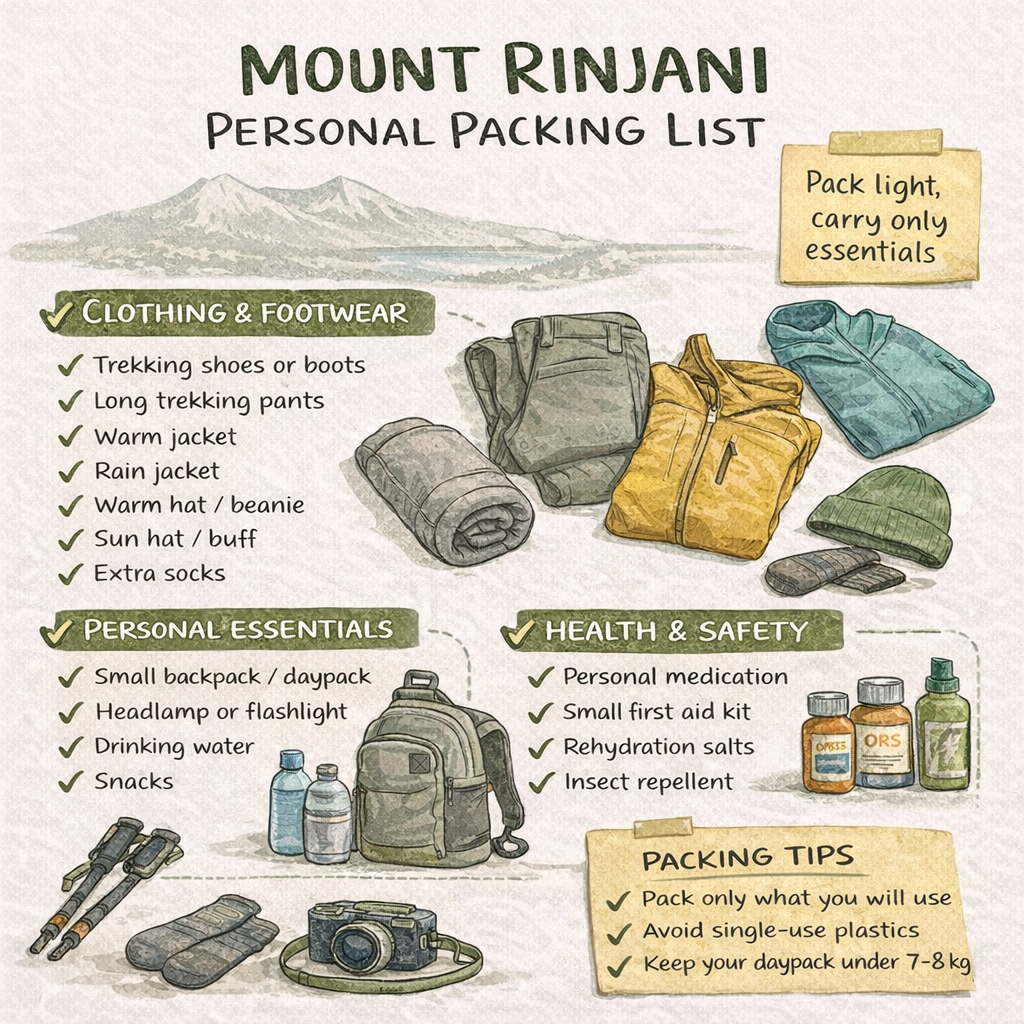
2. 2D1N Senaru Crater Rim (Overnight at Rim)
This program includes camping at the crater rim with cold night temperatures.
Key Conditions 2D1N Senaru Mount Rinjani packing list
- Forest trekking
- Overnight camping
- Cold night and wind at crater rim
- Recommended Packing
- Daypack (20–25L)
- Trekking shoes
- Long trekking pants
- Thermal base layer
- Warm jacket
- Rain jacket
- Gloves and warm hat
- Headlamp or flashlight
- Personal toiletries
- Power bank
Camping equipment and meals are provided.
3. 2D1N Summit Sembalun (Fast Summit Program)
This is a physically demanding program with a night summit push.
Key Conditions Mount Rinjani packing list
- Long walking distance
- Open savanna (hot daytime)
- Very cold summit conditions
- Early morning summit attack
- Recommended Packing
- Daypack (20–25L)
- Trekking shoes (mandatory)
- Thermal top and bottom
- Thick insulated jacket
- Windproof outer layer
- Gloves, warm hat, neck warmer
- Headlamp (mandatory)
- Trekking poles (recommended)
- Energy snacks
This program is not suitable for beginners.
4. 3D2N Senaru – Lake – Senaru (No Summit)
This program focuses on crater rim, Segara Anak Lake, and hot springs.
Key Conditions
- Forest trekking
- Steep descent to the lake
- Hot springs and lake environment
- Recommended Packing
- Daypack (20–30L)
- Trekking shoes
- Light sandals (for campsite)
- Swimwear (for hot springs)
- Quick-dry towel
- Thermal layer
- Warm jacket
- Rain protection
- Personal hygiene items
Good balance of adventure and relaxation.
5. 3D2N Summit Programs (Sembalun–Senaru or Sembalun–Torean)
These are classic summit programs with varied terrain.
Key Conditions
- Open savanna + volcanic sand
- Cold summit temperatures
- Lake or valley descent
- Recommended Packing
- Daypack (25–30L)
- Trekking shoes
- Thermal layers (top & bottom)
- Insulated jacket
- Rain jacket
- Gloves, warm hat, buff
- Headlamp
- Trekking poles
- Extra socks
Highly recommended for trekkers with good fitness.
6. 4D3N Summit Programs (With Lake & Hot Springs)
Longer duration with extra recovery time.
Key Conditions
- Multiple camping nights
- Summit attempt
- Lake and valley trekking
- Recommended Packing
- Daypack (25–30L)
- Trekking shoes + sandals
- Full thermal set
- Warm jacket
- Extra clothing (1 set)
- Swimwear and towel
- Personal medication
- Power bank
Ideal for trekkers who prefer a slower pace.
7. 5D4N Expedition (Summit + Extended Lake Time)
The most complete Rinjani experience.
Key Conditions
- Long duration
- Multiple terrain types
- High exposure to weather changes
- Recommended Packing
- Daypack (30L)
- Durable trekking shoes
- Extra socks and base layers
- Thick insulated jacket
- Rain gear
- Trekking poles
- Personal comfort items (minimal)
- Pack efficiently to avoid unnecessary weight.
- What Green Rinjani Provides
- All trekking programs include:
- Tents, sleeping bags, and mats
- Cooking equipment and meals
- Drinking water (minimum 3 liters per person per day)
- Porters to carry logistics
- Guests carry only personal items.
- Smart Packing Tips
- Pack only what you will use
- Avoid single-use plastics
- Use reusable bottles and containers
- Keep your daypack under 7–8 kg
- Ask your operator if unsure
What We Provide – Green Rinjani Trekking Support & Facilities
To ensure a safe, comfortable, and well-organized Mount Rinjani trekking experience, Green Rinjani provides complete trekking support and facilities for both Standard and Deluxe trekking packages.
Everything listed below is prepared and managed by the Green Rinjani team to support your trekking program from arrival day, during the trek, and after returning from the mountain.
Trekking Equipment & Camping Facilities
Green Rinjani provides complete camping and mountain equipment for overnight trekking programs.
Our trekking equipment includes:
- Quality trekking tents
- Sleeping bags suitable for cold mountain temperatures
- Mattress and pillow
- Camping chairs and table
- Cooking equipment and kitchen utensils
- Dining equipment, including plates, cups, and cutlery
- Toilet tent with toilet paper
- Trash bags and waste management support
Equipment quality and comfort level may vary depending on whether you choose Standard or Deluxe Service.
All trekking equipment is checked, cleaned, and prepared before each trek.
Food & Drinking Water
During the trek, all meals are prepared by our porter team on the mountain.
Green Rinjani provides:
- Breakfast, lunch, and dinner
- Freshly cooked Indonesian meals
- Seasonal fruits
- Snacks
- Tea and coffee
- Soft drinks, depending on the package
- Minimum 3 liters of mineral water per person per day
Food quality, meal variety, and extra comfort items may vary between Standard and Deluxe Service.
Guests may also bring personal snacks such as energy bars, chocolate, candy, or electrolyte powder if preferred.
Professional Guides & Porters
Every Mount Rinjani trek is supported by licensed local guides and experienced local porters.
Our guides are responsible for:
- Route navigation
- Trekking pace and timing
- Safety supervision
- Basic first aid support
- Weather assessment
- Decision-making during the trek
- Guest support and coordination
Our porters are responsible for:
- Carrying camping equipment
- Carrying food and drinking water
- Setting up and dismantling camp
- Preparing meals
- Collecting and carrying rubbish down from the mountain
Guests are only required to carry their personal daypack with items such as water, jacket, headlamp, medicine, camera, and personal belongings.
Accommodation Before the Trek
Most Green Rinjani trekking packages include one night accommodation in Senaru Village before the trek.
This usually includes:
- 1 night accommodation before trekking
- Private room
- Air conditioning
- Hot shower
- Clean and comfortable bedding
- Dinner at Green Rinjani restaurant on arrival day
- Breakfast before trekking
- Evening briefing about itinerary, safety, and preparation
Luxury accommodation upgrades are available for Deluxe Service upon request and may require an additional cost.
Transportation & Transfers
Green Rinjani provides pick-up and return transfers for trekking guests from selected areas in Lombok.
Included pick-up and drop-off areas usually include:
- Lombok International Airport
- Kuta Lombok
- Tetebatu
- Mataram area
- Senggigi area
- Bangsal Harbor
- Kayangan Port
- Tanjung area
Transfers are arranged using Green Rinjani vehicles whenever possible.
Important Transport Notes
- We do not use pick-up trucks for long-distance transfers.
- Pick-up trucks are only used for short local access when necessary, usually around 10 minutes on the Senaru route.
- Sembalun route transfers are arranged with closed vehicles whenever possible.
- Extra transport charges may apply for certain areas such as Selong Belanak, Ekas, Pink Beach, Sekotong, Lembar, and the Gili Islands.
Permits & Basic Trekking Insurance
Green Rinjani assists with the official Mount Rinjani National Park registration and trekking permit process.
Our trekking packages include:
- Mount Rinjani National Park entrance permit
- Official trekking registration
- Basic trekking insurance included with the official permit
Basic trekking insurance may include limited coverage for trekking-related accidents, basic medical support, and evacuation assistance according to the official permit policy.
Guests are strongly recommended to also have personal travel insurance that covers hiking or trekking activities.
Storage & On-Ground Support
Before and after the trek, guests can use Green Rinjani’s on-ground support facilities.
Available support includes:
- Secure luggage storage at Green Rinjani office or guest house
- Changing area after trekking
- Rest area before transfer
- Staff assistance for logistics and coordination
- Help with drop-off arrangements after trekking
Our team remains available to assist guests throughout the trekking process, from arrival day until the final drop-off.
What Guests Still Need to Prepare
Although Green Rinjani provides the main trekking logistics, guests are responsible for personal trekking items.
Guests should prepare:
- Trekking shoes
- Clothing and warm layers
- Rain jacket or poncho
- Headlamp or flashlight
- Small personal daypack
- Toiletries
- Personal medicine
- Power bank
- Personal snacks if needed
Some personal trekking items such as trekking poles, warm jackets, headlamps, gloves, or trekking shoes may be available for rent depending on size and availability.
Please request rental equipment before arrival.
Final Notes
Use this Mount Rinjani trekking packing list as a practical guide before arrival, and contact Green Rinjani if you need help preparing your personal gear.
Each route, duration, and season has different conditions. A 2D1N crater rim trek requires different preparation from a summit trek, lake trek, or longer 5D4N expedition.
Bringing too much weight can make the trek harder, while bringing the wrong gear can affect your comfort and safety.
If you are unsure what to bring, please contact Green Rinjani before your arrival. Our team will help you prepare based on your selected route, trekking duration, weather conditions, and personal needs.
