
Sembalun Trekking Route to Mount Rinjani Summit
The Sembalun trekking route is the main route for reaching the summit of Mount Rinjani at 3,726 meters above sea level. Starting from Sembalun Village in East Lombok, this route is widely used for summit trekking programs because it offers the most common and direct access to the highest point of Mount Rinjani.
Unlike the Senaru route, which climbs through dense tropical rainforest, the Sembalun trekking route begins with open savanna, wide grasslands, rolling hills, and exposed mountain scenery. The trail looks gentle at first, but it becomes much more demanding as trekkers climb toward Sembalun Crater Rim and continue to the summit.
The Sembalun trekking route is best for trekkers who want to reach the summit, experience sunrise from the highest point of Mount Rinjani, and continue to Segara Anak Lake, hot springs, Senaru, or Torean on longer trekking programs.
This guide explains what the Sembalun trekking route is like, how difficult it is, what to expect on the trail, which trekking programs use this route, and how to prepare properly before choosing a Sembalun-based trek.
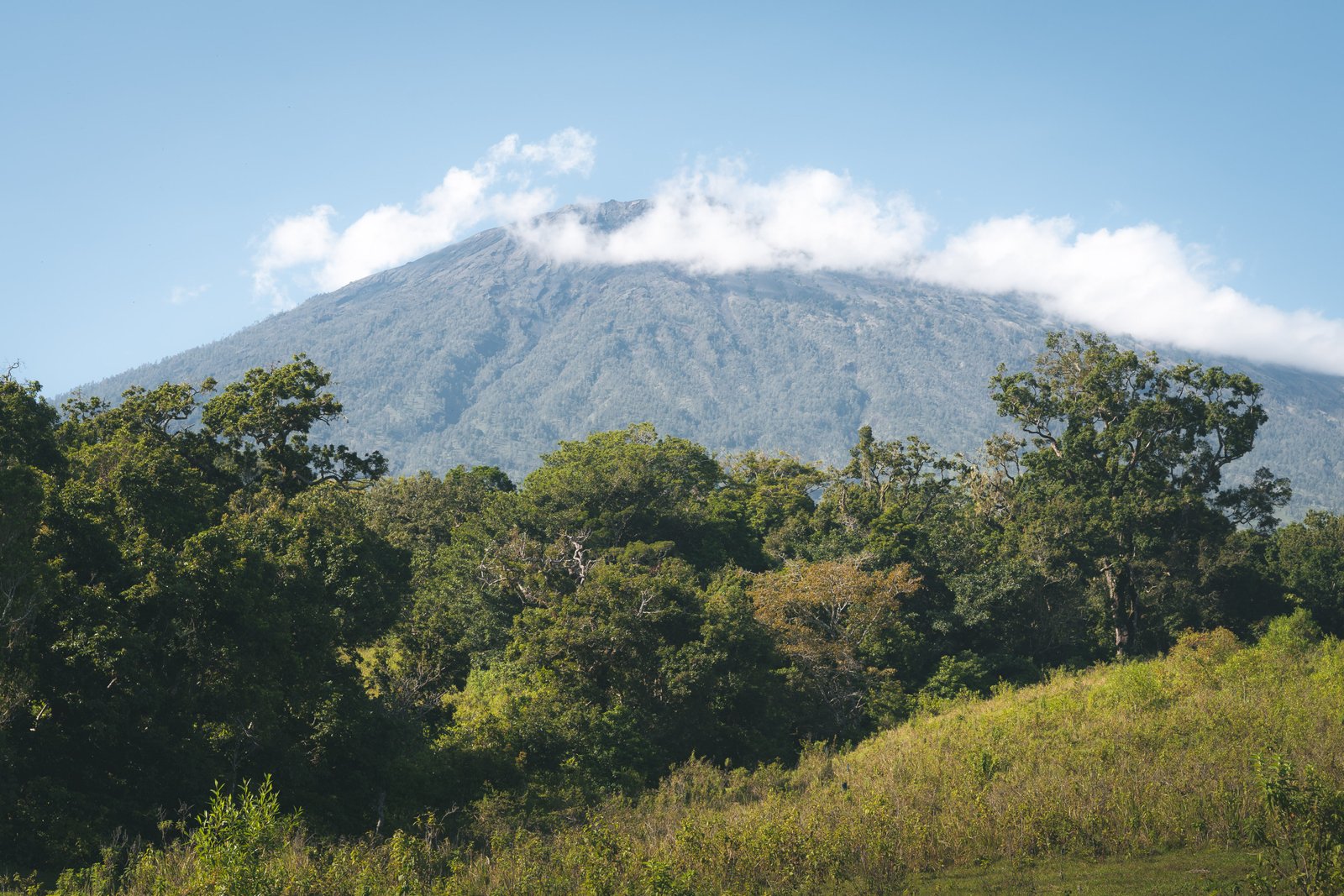
Sembalun Trekking Route Overview
| Route Detail | Information |
|---|---|
| Starting Point | Sembalun Village, East Lombok |
| Starting Elevation | Around 1,156 meters above sea level |
| Main Destination | Mount Rinjani Summit and Sembalun Crater Rim |
| Crater Rim Elevation | Around 2,639 meters above sea level |
| Summit Elevation | 3,726 meters above sea level |
| Main Terrain | Open savanna, rolling hills, steep climbs, volcanic sand, exposed summit ridge |
| Difficulty Level | Challenging |
| Best For | Summit trekking, sunrise seekers, fit trekkers, multi-day Rinjani programs |
| Common Duration | 2D1N, 3D2N, 4D3N, or 5D4N depending on program |
| Main Highlight | Sunrise from Mount Rinjani summit |
The Sembalun trekking route is the most direct and most popular route for summit trekking. It is beautiful, open, and dramatic, but it should not be underestimated because the summit push is physically and mentally demanding.
What Makes the Sembalun Trekking Route Different?
The Sembalun trekking route is different from other Mount Rinjani routes because it is more open, exposed, and summit-focused.
The trail begins in a wide mountain valley surrounded by farmland, hills, and open grassland. Compared with Senaru, there is much less shade. During sunny weather, the lower trail can feel hot and dry, while the crater rim and summit area can become cold and windy.
The main character of the Sembalun route is contrast:
- Hot and exposed daytime walking
- Open savanna and wide mountain views
- Long uphill sections after Pos 3
- Cold and windy crater rim camping
- Very early summit push
- Steep volcanic sand before the summit
- Powerful sunrise views from 3,726 meters
This route is ideal for trekkers whose main goal is to stand on the summit of Mount Rinjani.
What the Sembalun Trekking Route Feels Like
The Sembalun trekking route starts relatively gently through open grassland and rolling hills. At the beginning, many trekkers feel that the route is easier than expected because the trail is wide and the views are open.
However, the difficulty increases gradually. After the lower rest posts, the climb becomes steeper, especially after Pos 3. The famous “Seven Hills” section toward Sembalun Crater Rim tests stamina, pacing, and mental endurance.
At the crater rim, trekkers camp overnight before starting the summit push around midnight or early morning. This is the most challenging part of the Sembalun trekking route. The summit trail is steep, cold, windy, dark, and covered with loose volcanic sand.
Trekkers often describe the summit section as “two steps forward, one step back” because the sand can slide underfoot. Good pacing, warm clothing, strong mindset, and guide support are very important.
Sembalun Trekking Route Timeline
The exact timing depends on weather, trekking speed, group fitness, and national park procedures. However, the standard Day 1 timeline for Sembalun-based programs is usually as follows.
| Time | Trekking Section |
|---|---|
| 06:30 – 07:00 | Breakfast in Senaru or Sembalun |
| 07:00 – 07:30 | Transfer from Senaru to Sembalun if staying in Senaru |
| 08:00 – 08:30 | Registration and final preparation |
| 08:30 | Start trekking from Sembalun Village |
| 10:00 | Arrive at Pos 1, short rest |
| 10:10 | Continue to Pos 2 |
| 11:00 | Arrive at Pos 2, rest |
| 11:15 | Continue to Pos 3 |
| 12:30 | Arrive at Pos 3 for lunch and long rest |
| 12:30 – 13:00 | Continue toward Sembalun Crater Rim |
| 15:30 – 16:00 | Arrive at Sembalun Crater Rim |
This timeline is a general reference for normal trekking conditions. Actual arrival time can be earlier or later depending on group pace, weather, and trail conditions.
Sembalun Trekking Route Trail Sections and Rest Stops
The Sembalun trekking route is divided into several important sections. Each part has a different terrain character, physical demand, and preparation need.
Sembalun Village – Starting Point of the Sembalun Trekking Route
The trek begins from Sembalun Village at around 1,156 meters above sea level. This area is known for mountain farming landscapes, cool village atmosphere, and wide views toward the surrounding hills.
Before starting the trek, guests usually complete registration, permit checks, final preparation, and guide briefing.
Sembalun is commonly used for:
- 2D1N Summit Sembalun
- 3D2N Summit Sembalun to Senaru
- 3D2N Summit Sembalun to Torean
- 4D3N Summit programs
- 5D4N summit and lake expeditions
Pos 1 on the Sembalun Trekking Route
Pos 1 is the first main rest point on the Sembalun trekking route. The trail from Sembalun Village to Pos 1 passes through open grassland with gradual walking.
What to expect:
- Open savanna
- Gentle uphill walking
- Wide views
- Limited shade
- First short rest stop
This section helps trekkers warm up and adjust to the open terrain.
Pos 2 on the Sembalun Trekking Route
After Pos 1, the trail continues through open grassland and rolling hills toward Pos 2. The walking is still manageable, but the sun can feel strong because shade is limited.
What to expect:
- More exposed trail
- Gradual uphill
- Hot daytime conditions
- Wide mountain scenery
- Short rest before continuing higher
Hydration and sun protection are important in this section.
Pos 3 on the Sembalun Trekking Route
Pos 3 is one of the most important rest points on the Sembalun trekking route. It is commonly used for lunch and longer rest before the most demanding part of Day 1 begins.
What to expect:
- Lunch break
- Longer rest time
- Final major stop before crater rim climb
- Open mountain atmosphere
- Preparation before steeper ascent
After Pos 3, the route becomes significantly more challenging.
Seven Hills on the Sembalun Trekking Route
After Pos 3, trekkers continue toward Sembalun Crater Rim through a series of steep hills often known locally as the “Seven Hills” or “Bukit Penyesalan” section.
This is one of the hardest parts of Day 1. The trail becomes steeper and more tiring, especially after several hours of walking earlier in the day.
What to expect:
- Repeated uphill sections
- Steeper terrain
- Exposed trail
- Strong physical effort
- Slower walking pace
- Mental challenge before reaching camp
This section is not technical climbing, but it requires endurance and patience. A steady pace is better than rushing.
Sembalun Crater Rim on the Sembalun Trekking Route
Sembalun Crater Rim is located at around 2,639 meters above sea level. This is the main camping area before the summit push.
From the crater rim, trekkers can enjoy views of:
- Segara Anak Lake
- Mount Barujari
- Mount Rinjani summit
- Sembalun valley
- Sunset and sunrise landscapes
- Clouds moving across the crater
At night, the temperature can become very cold and windy. Warm clothing is essential.
Summit Push on the Sembalun Trekking Route
The summit push is the main reason many trekkers choose the Sembalun trekking route. It usually starts around midnight or early morning, depending on the guide’s decision, weather, and group pace.
The trail from Sembalun Crater Rim to the summit is steep and covered with loose volcanic sand. It is physically demanding because the ground can slide under each step.
What to expect:
- Dark early morning start
- Very cold temperature
- Strong wind
- Steep volcanic sand
- Slow walking pace
- Mental and physical challenge
- Sunrise from the summit if weather is clear
The summit section is not recommended for guests with very low fitness, serious knee problems, or poor preparation.
Sembalun Trekking Route Difficulty
The Sembalun trekking route is considered challenging.
It is not difficult because of technical climbing equipment, but because of long trekking hours, open exposure, steep elevation gain, cold crater rim conditions, and the summit push on loose volcanic sand.
Why the Sembalun Trekking Route Feels Challenging
The route can feel challenging because of:
- Long uphill walking
- Limited shade during the day
- Hot sun exposure in the savanna
- Steep climb after Pos 3
- Cold and windy crater rim camping
- Midnight or early morning summit push
- Loose volcanic sand near the summit
- Long descent after summit
- Physical fatigue over multiple days
The summit push requires strong mental endurance. Many trekkers find it harder than expected, even if they are physically active.
Who Can Do the Sembalun Trekking Route?
The Sembalun trekking route is suitable for:
- Fit trekkers
- Summit seekers
- Experienced hikers
- Active travelers with good endurance
- Guests who are comfortable with long uphill climbs
- Trekkers prepared for cold, wind, and early morning hiking
- Travelers who want a full Mount Rinjani summit experience
It is possible for first-time mountain trekkers, but only if they have strong fitness, good preparation, and realistic expectations.
Who Should Avoid the Sembalun Trekking Route?
You may need to reconsider the Sembalun trekking route if:
- You have very low fitness
- You are not comfortable walking uphill for many hours
- You have serious knee or ankle problems
- You cannot handle cold and wind
- You are not prepared for summit night
- You dislike open trails with limited shade
- You expect an easy trekking experience
Guests who want beautiful Rinjani views without the summit may prefer the Senaru Crater Rim route instead.
Sembalun Trekking Route Highlights
The Sembalun trekking route offers some of the most iconic Mount Rinjani experiences, especially for guests who want summit sunrise and open mountain scenery.Open Savanna on the Sembalun Trekking Route
The lower part of the Sembalun route offers wide open savanna views and rolling hills. This is one of the most recognizable landscapes on Mount Rinjani.
The scenery feels spacious, bright, and dramatic, especially during the dry season.
Sembalun Crater Rim Camp
Camping at Sembalun Crater Rim is one of the major highlights of the route. The camp offers dramatic mountain views and a direct connection to the summit trail.
During clear weather, guests can see Segara Anak Lake, Mount Barujari, and the summit ridge.
Summit Sunrise from Mount Rinjani
The summit sunrise is the main highlight for many trekkers. From the summit, guests may see Lombok, Sumbawa, Bali, Mount Agung, Segara Anak Lake, and clouds below the horizon when the weather is clear.
The sunrise moment is powerful, but reaching it requires serious physical effort and mental preparation.
Segara Anak Lake and Hot Springs Connection
Longer Sembalun-based programs continue from the summit area down toward Segara Anak Lake and the hot springs.
This route connection allows trekkers to experience:
- Summit sunrise
- Crater rim camping
- Lake descent
- Hot springs
- Senaru forest descent or Torean valley exit
This is why Sembalun is often used as the starting route for complete Mount Rinjani programs.
Sembalun Trekking Route Programs
The Sembalun trekking route can be used for several trekking programs. Each program has a different duration, difficulty level, and route combination.
2D1N Sembalun Trekking Route – Summit Sembalun
The 2D1N Summit Sembalun trek is the fastest summit program. It starts and ends in Sembalun and focuses mainly on reaching the summit.
Best for:
- Fit trekkers with limited time
- Guests who want summit sunrise only
- Travelers who are comfortable with a fast itinerary
- Experienced hikers or very active travelers
Important note:
This program is physically demanding because it includes a long Day 1, cold summit push, and descent on Day 2 with limited recovery time.
3D2N Sembalun Trekking Route to Senaru
This is one of the classic Mount Rinjani summit programs. It starts from Sembalun, reaches the summit, continues to Segara Anak Lake, and exits through Senaru forest.
Best for:
- Trekkers who want summit, lake, and forest scenery
- Guests who want a complete classic route
- Travelers with good fitness
- Trekkers who prefer a balanced 3-day program
This program includes more scenery than the 2D1N route but still requires strong fitness.
3D2N Sembalun Trekking Route to Torean
This program starts from Sembalun, reaches the summit, visits Segara Anak Lake and hot springs, then exits via the Torean valley route.
Best for:
- Fit trekkers who want summit and Torean scenery
- Guests who want lake, hot springs, waterfalls, and valley views
- Travelers comfortable with rocky and uneven terrain
- Adventure-focused trekkers
The Torean exit is scenic but more technical than many people expect.
4D3N Sembalun Trekking Route to Senaru
The 4D3N Sembalun to Senaru program offers a slower pace than the 3D2N version. It gives more time for rest, lake experience, and overall recovery.
Best for:
- Guests who want a more comfortable summit program
- Trekkers who prefer more rest time
- Travelers who want summit, lake, hot springs, and forest descent
- Guests who want a better pace than the 3D2N itinerary
4D3N Sembalun Trekking Route to Torean
This program combines summit achievement with one of the most scenic descents on Mount Rinjani.
Best for:
- Trekkers who want a complete adventure
- Guests who want summit, lake, hot springs, and Torean valley
- Fit hikers who can handle longer trekking days
- Travelers who want dramatic scenery and route variety
The 4D3N pace makes this route more comfortable than the faster 3D2N version.
5D4N Sembalun Trekking Route Expedition
The 5D4N Sembalun to Torean program is one of the most complete Mount Rinjani trekking experiences.
Best for:
- Guests who want the fullest Rinjani experience
- Trekkers who prefer a slower and more enjoyable pace
- Travelers who want summit, lake, hot springs, and Torean scenery
- Guests who want more time for rest and photography
This program is ideal for those who want to explore more of Mount Rinjani without rushing.
Sembalun Trekking Route Connections
One of the strengths of the Sembalun trekking route is its connection to summit, lake, Senaru, and Torean route combinations.
Sembalun Trekking Route to Summit and Back to Sembalun
This is the shortest summit route and is used for the 2D1N Summit Sembalun program.
Best for:
- Summit-focused trekkers
- Guests with limited time
- Fit hikers
- Travelers who do not need lake or hot springs
Sembalun Trekking Route to Summit, Lake and Senaru
This is the classic Rinjani route combination. It includes summit, Segara Anak Lake, hot springs, and forest descent through Senaru.
Best for:
- Classic complete Rinjani experience
- Summit and lake combination
- Trekkers who want route variety
- Guests who prefer forest descent
Sembalun Trekking Route to Summit, Lake and Torean
This route is popular for guests who want the summit and the dramatic scenery of Torean.
Best for:
- Summit, lake, and hot springs
- Waterfalls and valley scenery
- Adventure-focused trekkers
- Guests comfortable with technical terrain
Sembalun Trekking Route vs Senaru Route
| Comparison | Sembalun Trekking Route | Senaru Route |
|---|---|---|
| Main Character | Open savanna and summit trail | Rainforest and crater rim trail |
| Best For | Summit trekking | Crater rim and forest trekking |
| Starting Elevation | Higher starting point | Lower starting point |
| Weather Exposure | More exposed to sun and wind | More shaded and humid |
| Main Challenge | Summit push and volcanic sand | Long forest ascent and descent |
| Common Programs | 2D1N, 3D2N, 4D3N, 5D4N summit | 1 day, 2D1N crater rim, lake programs |
| Best Choice If | You want the summit | You want crater rim views without summit |
Choose Sembalun if your main goal is the summit. Choose Senaru if you prefer rainforest trekking and crater rim views without the summit.
Sembalun Trekking Route vs Torean Route
| Comparison | Sembalun Trekking Route | Torean Route |
|---|---|---|
| Main Character | Summit access and open terrain | Valley, rivers, waterfalls |
| Common Use | Starting route for summit programs | Exit route or lake route |
| Terrain | Savanna, hills, volcanic sand | Rocky, narrow, river valleys |
| Difficulty | Challenging | Challenging and more technical |
| Main Highlight | Summit sunrise | Scenic valley and waterfalls |
| Best For | Summit seekers | Scenic descent and lake programs |
Sembalun is the main route to climb up for the summit. Torean is often used as a scenic exit route after summit and lake programs.
Best Time for the Sembalun Trekking Route
The best time to trek the Sembalun trekking route is generally during the official Mount Rinjani trekking season from April to December, depending on route status and weather conditions.
Best months for summit trekking:
- June
- July
- August
- September
Good months for fewer crowds:
- May
- June
- September
- October
During November and December, weather can become more humid with light rain, so shorter routes or careful planning are recommended. Mount Rinjani is commonly closed from January to March during the rainy season for safety and ecosystem recovery.
Guests should always confirm the latest route status before booking.
What to Bring for the Sembalun Trekking Route
The Sembalun trekking route is exposed, sunny, windy, and cold at higher elevations. Packing should focus on sun protection, summit warmth, proper shoes, and light but useful personal gear.
Recommended items:
- Trekking shoes with strong grip
- Warm jacket
- Windproof layer
- Thermal base layer
- Gloves and beanie
- Headlamp
- Rain jacket or poncho
- Quick-dry trekking clothes
- Hat or cap
- Sunglasses
- Sunscreen
- Buff or scarf for dust
- Extra socks
- Personal medicine
- Small daypack
- Power bank
- Refillable water bottle
For overnight programs, Green Rinjani provides camping equipment, meals, drinking water, guide, porters, permit assistance, and trekking support.
Common Mistakes on the Sembalun Trekking Route
Avoid these common mistakes before choosing the Sembalun trekking route:
- Thinking the first savanna section means the whole route is easy
- Underestimating sun exposure and dehydration
- Starting too fast on Day 1
- Not preparing warm clothing for crater rim and summit night
- Wearing shoes with poor grip
- Forgetting a headlamp for summit push
- Choosing 2D1N summit without enough fitness
- Ignoring weather and route status
- Thinking summit success is guaranteed
- Not listening to guide decisions during bad weather
The Sembalun route is rewarding, but it requires preparation and respect.
Why Trek the Sembalun Trekking Route with Green Rinjani?
Green Rinjani organizes Sembalun-based trekking programs with structured preparation, experienced guides, professional porters, and clear route planning.
Our Sembalun route programs include:
- Licensed local guide team
- Experienced porters
- Pre-trek briefing
- Permit assistance
- Meals and drinking water
- Camping equipment
- One night accommodation before trekking
- Luggage storage
- Pick-up and drop-off arrangements
- Responsible trekking and waste management support
We help guests choose the right Sembalun program based on fitness level, available time, weather conditions, and trekking goal.
Final Thoughts on the Sembalun Trekking Route
The Sembalun trekking route is the main gateway to Mount Rinjani summit. It offers wide savanna landscapes, crater rim camping, volcanic terrain, and the unforgettable challenge of reaching the 3,726-meter summit before sunrise.
This route is beautiful and rewarding, but it is not easy. It requires preparation, patience, and strong physical effort. Trekkers who approach the Sembalun route with realistic expectations often find it one of the most powerful adventure experiences in Indonesia.
If your goal is to reach the summit of Mount Rinjani, the Sembalun route is the route to understand first.
Start Your Sembalun Trekking Adventure
Whether you are planning a fast 2D1N summit trek or a longer 4D3N or 5D4N expedition, Green Rinjani can help you choose the right Sembalun trekking program based on your time, fitness level, and travel goals.
Contact our team before booking if you are unsure which Sembalun route option is best for you.
Frequently Asked Questions
Where does the Sembalun trekking route start?
The Sembalun trekking route starts from Sembalun Village in East Lombok, at around 1,156 meters above sea level.
Is the Sembalun trekking route best for Mount Rinjani summit?
Yes. The Sembalun trekking route is the main route used for Mount Rinjani summit trekking because it provides the most common access to the summit trail.
How difficult is the Sembalun trekking route?
The Sembalun trekking route is challenging. It includes long uphill walking, exposed savanna, cold crater rim camping, and a steep summit push on loose volcanic sand.
Does the Sembalun trekking route include Segara Anak Lake?
The 2D1N Summit Sembalun program does not include Segara Anak Lake. Longer programs such as 3D2N, 4D3N, or 5D4N can include the lake and hot springs depending on the itinerary.
What is the hardest part of the Sembalun trekking route?
The hardest part is usually the summit push from Sembalun Crater Rim to the summit. This section is steep, cold, windy, dark, and covered with loose volcanic sand.
Is the Sembalun trekking route suitable for beginners?
The Sembalun trekking route can be possible for beginners only if they have strong fitness and good preparation. It is not recommended for beginners with low fitness or no preparation.
What should I bring for the Sembalun trekking route?
Guests should bring trekking shoes, warm jacket, windproof layer, thermal clothing, gloves, beanie, headlamp, rain jacket, sunscreen, sunglasses, hat, personal medicine, and a small daypack.
Can I finish the Sembalun trekking route in Senaru or Torean?
Yes. Longer Sembalun-based programs can finish in Senaru or Torean after summit, Segara Anak Lake, and hot springs, depending on the selected itinerary.
When is the best time for the Sembalun trekking route?
The best months for the Sembalun trekking route are generally June to September, especially for summit trekking. May, October, and early season periods can also be good depending on weather and route status.
Can Green Rinjani help me choose a Sembalun trekking program?
Yes. Green Rinjani can recommend the most suitable Sembalun trekking program based on your fitness level, travel date, available time, route preference, and trekking goal.
