
Protecting Mount Rinjani Through Responsible Trekking
Sustainability & Zero Waste is not a campaign, a slogan, or a marketing trend at Green Rinjani.
It is a long-term responsibility that guides how we plan, operate, and lead every trekking program — on every trail, every day.
From waste management and environmental education to porter responsibility and operational standards, our Sustainability & Zero Waste commitment is embedded directly into daily practice. We believe responsible trekking is not optional; it is the only way Mount Rinjani can remain a living ecosystem rather than a damaged destination.
Mount Rinjani is one of Indonesia’s most iconic volcanoes. Its dramatic landscapes, rich biodiversity, and cultural significance attract thousands of trekkers each year. However, increased visitor numbers also bring serious environmental pressure, particularly unmanaged waste and campsite pollution.
That is why Green Rinjani actively supports and enforces Rinjani Zero Waste principles, focusing on prevention, education, and accountability — not just clean-up after damage has occurred.

Rinjani Zero Waste: Beyond Clean-Up Activities
Rinjani Zero Waste aims to reduce pollution, protect local communities, and ensure that future generations can continue to experience the mountain in its natural state.
While clean-up activities are important, they are not a long-term solution.
In 2021, Green Rinjani participated in a major clean-up campaign together with environmental advocates, successfully removing 1.6 tons of waste from Rinjani campsites. However, despite repeated clean-ups, waste continues to return.
This reality makes one thing clear:
prevention matters more than clean-up.
Sustainability & Zero Waste Policy
At Green Rinjani, we apply strict waste-prevention rules on every trekking program:
- Guides and porters are required to carry down more waste than they bring up
- Single-use plastics are actively reduced
- Guests receive clear zero-waste guidance before trekking
- Waste is managed responsibly from start to finish
By applying these rules consistently, we reduce the amount of trash entering the mountain ecosystem rather than reacting after damage has occurred.
How You Can Trek Sustainably on Mount Rinjani
Sustainable trekking starts with smart preparation. Many trekking items are designed for convenience, but often create unnecessary plastic waste.
Below are practical zero-waste guidelines every trekker should follow:
1. Bring Reusable Water Bottles
Use refillable bottles instead of single-use plastic. Extra water support is provided by guides and porters.
2. Use Biodegradable Toiletries
Choose biodegradable soap, toothpaste, and shampoo. Chemical products can contaminate water sources.
3. Pack Reusable Food Containers
Avoid plastic packaging. Bring your own containers and request no plastic bags.
4. Avoid Disposable Cutlery
Carry reusable utensils or a spork instead of plastic cutlery.
5. Carry All Trash Back Down
Store waste in zip bags or trash bags and dispose of it properly after the trek.
6. Buy Local, Reduce Packaging
Support local markets and choose unpackaged food to reduce plastic waste and carbon footprint.
7. Bring a Reusable Trash Bag
Collect not only your own waste, but any trash you encounter along the trail.
8. Choose Eco-Friendly Personal Items
Use plastic-free toiletries such as shampoo bars, bamboo toothbrushes, and compostable toilet paper.
9. Follow Leave No Trace Principles
Stay on designated trails, respect wildlife, and avoid damaging vegetation.
10. Educate and Inspire Others
Share zero-waste practices with fellow trekkers and help build a culture of responsibility.
Zero Waste Philosophy
The Zero Waste philosophy focuses on four core actions:
- Reduce – Avoid unnecessary packaging and disposable items
- Reuse – Use refillable bottles, containers, and durable gear
- Recycle – Separate recyclable materials where possible
- Compost – Manage organic waste responsibly
Rinjani Zero Waste applies these principles specifically to trekking activities in fragile mountain environments.
Working with Authorities & Local Communities
Green Rinjani supports initiatives led by the Rinjani National Park Authority and local organizations by:
- Promoting zero-waste trekking regulations
- Educating guests and guides
- Supporting waste awareness programs
- Participating in coordinated clean-up and conservation efforts
Sustainable tourism requires cooperation — not just from operators, but from trekkers, communities, and authorities working together.
Plant Rescue Division
Protecting Life Beyond the Trail
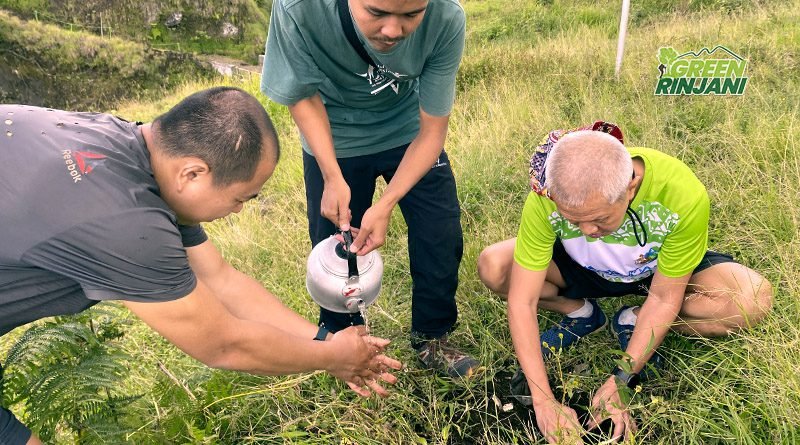
Green Rinjani also supports the Plant Rescue Division, an initiative created by our team to highlight the importance of plant conservation.
While many programs focus on animal rescue, plants often receive less attention. This initiative actively works to:
- Restore damaged plant life
- Promote reforestation efforts
- Educate travelers about biodiversity
- Encourage long-term ecological care
Every plant plays a role in sustaining life on the mountain.
RINJANI GREEN TRAILS
Our Sustainability Actions in Practice
Zero Waste Trekking
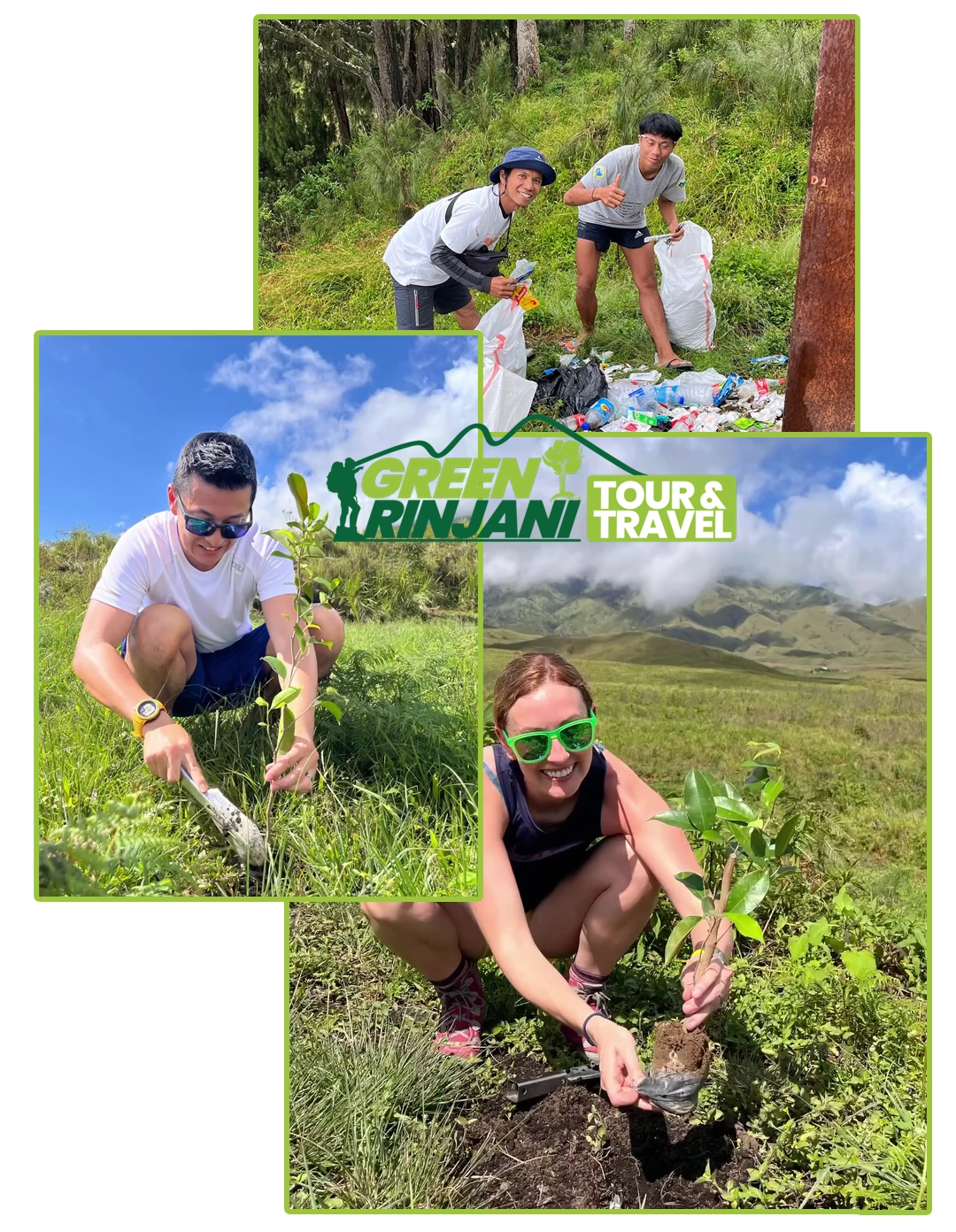
Our team collects 1–2 sacks of litter on every trek and manages waste responsibly at all stages.
One Trekker, One Tree
For every guest trekking with us, one tree is planted to support reforestation.
Responsible Operations
We use eco-friendly equipment, ethical porter management, local sourcing, and proper waste handling at high altitude.
Our Mission
Our mission is simple and long-term:
To protect Mount Rinjani, care for nature, and inspire every traveler to leave a positive impact with every step.
Sustainability is not optional — it is the future of responsible trekking.
